| Transformedbylight.com | Michael Stirling-Aird Landscape Photography |
||||||||||
![]() |
|||||||||||
About transformedbylight Firstly - thankyou for taking the time to look at this site - I really do hope you enjoy the images. I thought for a long time about what name was appropriate for this website. 'Transformedbylight' goes to the heart of what I believe is a key aspect of landscape photography. As I'm sure you will have experienced, there are certain weather conditions when very suddenly the landscape can be totally transformed. These moments may only last a few seconds and it an be very difficult to make such images (particularly because successful images nearly always need much more then good light). The wonderful thing about light, I think, is that landscapes reflect different types of light, and soft light can be extremely effective, for example. It's not all about dramatic light. My aim is to build up a portfolio of large format images which are of the very highest quality and are suitable for stunning prints which have a 'walk into the image' feel about them. The depth, tonal range, colour and detail of large format prints is truly special, though ultimately what is special, I hope, is the scene itself - this is where the real challenge lies! Being based in Edinburgh is an ideal base to explore the Highlands, and I find that getting off the beaten track and exploring is the best way to find wonderful landscapes. Sometimes I will see spmething that has potential, and return when the weather conditions are likely to produce better light, and occasionally I just get lucky. In Scotland, I find that the best weather conditions by far are when there is a Northerly airflow as this brings cold, clear air, and this rule applies at all times of the year, though in Winter this can cause a bit if frost nip in the fingers! For information about the equipment I use, please scroll to the bottom of this page. Large format image quality The picture below on the left is a shot of Sandwood Bay in North West Scotland. Once this has been properly scanned to 44 by 35 inches (the maximum size for this Limited Edition print), the detail is still outstanding - the picture on the right shows a small part of the scene from the lower (centre) forground - you can literally see the grains of sand, and this is on a 44 by 35 inch print.
As another example, the picture below on the left is a shot of Strathan Bay (also in North West Scotland). Once this has been properly scanned to 44 by 35 inches (the maximum size for this Limited Edition print), the picture on the right shows a crop from the centre foreground which hopefully illustrates the image quality you can expect.
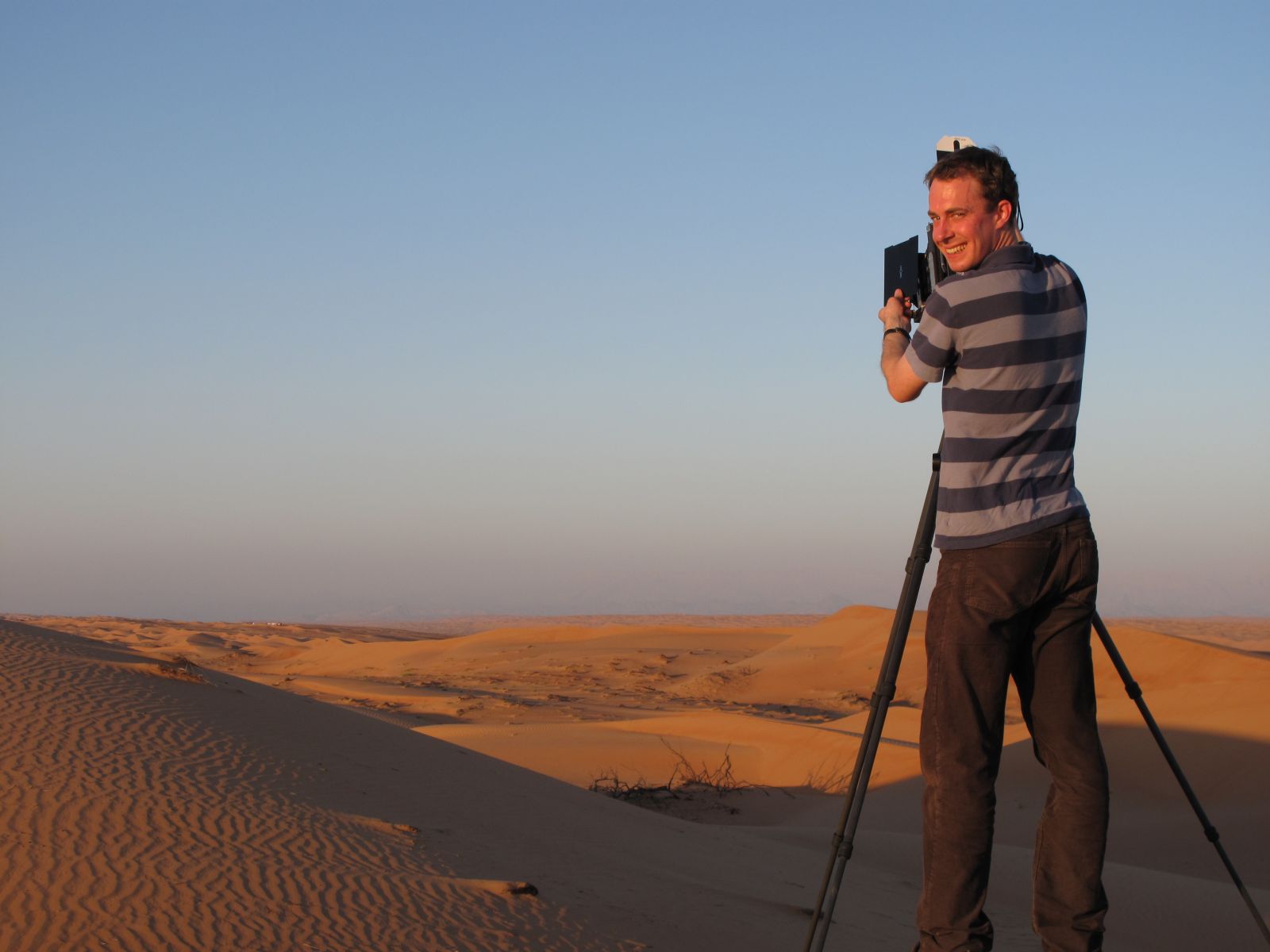
Limited Edition Large format fine art prints The Limited Edition fine art prints are printed on beautiful Hahnemuhle Fine Art Pearl paper and signed with the edition number, and wrapped in protective paper inside a cardboard tube. A certificate of authenticity is also provided: the certificate is signed by myself and Giclée UK who print the image, and are Guarantors of the Edition. For more information about Giclée UK, who supply the art community with exceptional museum standard Fine Art prints, please see their website http://www.gicleeuk.com/documents/home_1.html The Edition for each print is a total of either 25, 50 or 100. No other fine art prints will be sold once an Edition has sold out, though I may use the print for calendars/books/commercial assignments. If you have any questions at all, please email michael@transformedbylight.com or call me on 07886 468 976 and I will be delighted to help you. Equipment & creating digital files I never venture into the hills without good thermals, goretex waterproofs, a survival bag, headtorch, food and water. It's easy to underestimate just how cold it can be in the hills in Scotland, particularly when hours need to be spent waiting for the right light. Even in Summer, the temperature can drop rapidly during the 'magic hours'- snow in June on the mountain tops is not uncommon. The camera I use is an Ebony RSW 45 (meaning the negative is approx 4x5 inches) large format camera, mainly because the image quality is outstanding, but also because it's a joy to use and is, in my view, perfectly suited for landscape photograpy. As large format cameras go, it's remarkably light. I currently use three Rodenstock lenses (wide angle and 'standard') which covers most situations, though I do sometimes miss not having a telephoto lens. I use Fuji Velvia 50 and 100 and Provia 100 colour reversal film, my preference increasingly being for Provia 100 which gives a more 'neutral' result. The transparencies are then scanned using a Hasselblad X1 flextight scanner, giving outstanding detail, tonal range and colour - the resulting digital file can then be used to produce the very highest quality prints. In case the technical side of digitising large format transparencies is of interest, the scans can produce a 400mb 16 bit digital file, uninterpolated. This produces significantly more pixels than any top of the range digital SLR, and better tonal range, a benefit that is particularly noticeable in low light conditions such as shots made before dawn or after dusk (and this benefit is magnified by the fact that the lens quality for large format cameras is superb). When scanning transparencies, I turn off all sharpening and then clean the images in Photoshop (to remove dust). In most cases very little or no sharpening is required for the final prints, testimony to the image quality of large format. Like many landscape photographers, because many of the shots I make involve light variations which are beyond the tolerance of film (or digital) sensors, I use Lee hard and soft graduated Neutral Density filters to reduce the light from the brighter portion of the scene - this is crucial as it allows the whole scene to be correctly exposed. Using a large format camera is, in most cases, perfect for landscape photography. Although setting up the camera can be time consuming, and wind causes camera shake, being able to view the scene inverted on the ground glass is a huge help in terms of composing. The process lends itself to a slow, methodical approach where it is worth considering all potential elements in the scene, watching the changing light, and then composing in anticipation of something special. Essentially, I am looking to get one image - as well composed and exposed as possible, albeit these are subjective factors. One of the most useful accessories I use is a Linhof zoom viewfinder which enables the photographer to try different compositions wothout needing the set up the camera. This not only saves a huge amount of time, but is invaluable for spotting opportunities, or ruling out what might at first appear a worthwhile composition. Other essential equipment includes a spotmeter, carbon fibre tripod, geared tripod head and several black binliners - useful to sit on when it's wet, and for protecting the camera from passing showers.
|
|||||||||||
© Copyright Michael Stirling-Aird 2007 Legal/disclaimer Copyright statement Links |
|||||||||||